
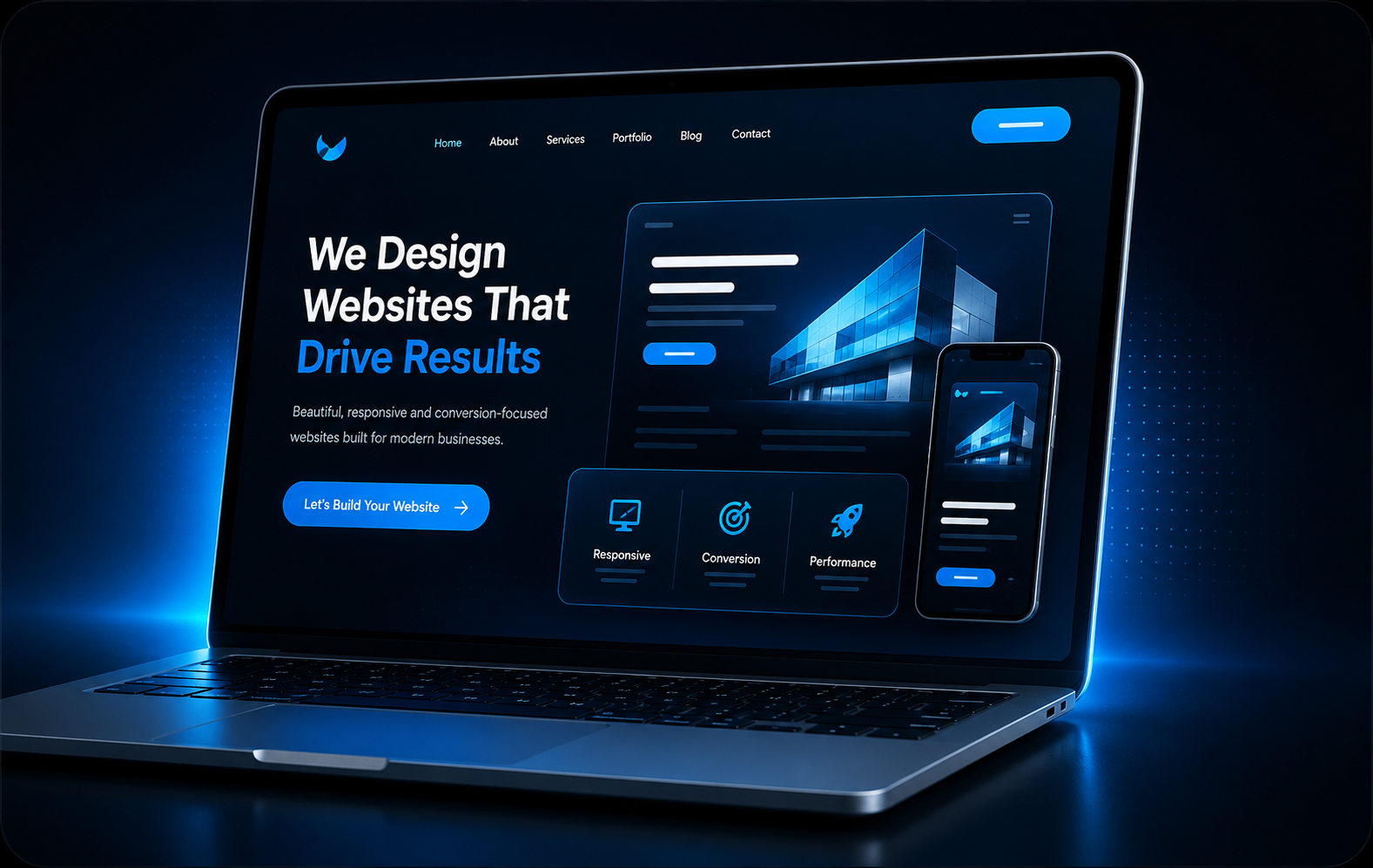
A strong website should explain what you do, make people trust you, and make the next step obvious. Livasys combines brand thinking, UX structure, responsive design and conversion-focused content to create websites that feel distinctive while remaining easy to use.
Website design that starts with your business goals
Website design is not simply the arrangement of colors, images and sections. It is the process of turning a business proposition into a digital experience that customers can understand quickly. At Livasys, we begin by understanding your audience, offer, competitors, positioning and the action you want visitors to take. That foundation informs the page hierarchy, messaging, navigation, visual language and calls to action. The result is a website that looks purposeful instead of decorative and gives every major section a job.
Research, information architecture and UX
Before visual design, we establish a clear information architecture. We decide which pages matter, how they connect and what a visitor should discover at each stage. Navigation is kept intuitive, important services are easy to find, and supporting content is connected through internal links. We consider search intent as well as user intent so the structure can support both humans and search engines. This approach is especially useful for businesses with several services, locations or customer segments.
Responsive design for real-world browsing
Most audiences move between phones, tablets and desktops. A design that only looks good on one screen is not a finished website. Livasys designs responsive layouts that adapt typography, spacing, navigation, cards, forms and imagery to different viewport sizes. We pay attention to tap targets, readable line lengths, visual hierarchy and page speed. The goal is a consistent experience without forcing users to zoom, scroll sideways or fight the interface.
Conversion-focused page structure
Good design supports business outcomes. We position calls to action where they make sense, reduce unnecessary friction in forms, clarify service benefits and use trust signals near decision points. Depending on the business, conversion actions may include a phone call, WhatsApp conversation, enquiry form, consultation request, booking or purchase. The website is designed around these journeys rather than treating every page as an isolated brochure.
SEO-ready visual and content foundations
Search visibility starts with structure. Our website design work supports semantic headings, descriptive page titles, meta descriptions, clean URLs, internal linking, accessible images and content blocks that answer real questions. We also consider local search when the business serves Hyderabad, Bangalore, the UK or another defined market. The objective is not keyword stuffing; it is to make the website easier for search engines and AI-driven discovery systems to understand.
A practical design process
Our process typically moves through discovery, sitemap planning, wireframing, visual direction, responsive page design, content alignment, development handoff and quality assurance. Feedback is collected at defined checkpoints so the project stays focused. We test key journeys rather than relying only on screenshots. This reduces late-stage surprises and helps ensure that the final website is both attractive and usable.
What you can expect from Livasys
You get a design system that can scale across pages instead of a collection of disconnected screens. Typography, buttons, spacing, cards, forms and content sections are treated as reusable patterns. This makes future pages easier to add and keeps the brand consistent. We can also work with an existing visual identity when you already have established colors, logos and brand guidelines.
Website design for different business needs
We design websites for small businesses, professional services, startups, education providers, local companies and organizations that need a stronger digital presence. A service business may need a lead-generation site with location pages and enquiry flows. A startup may need a clear product story. An established company may need a redesign that improves usability without losing brand recognition. The design approach changes with the business, not the other way around.
Why thoughtful design matters
A visitor forms an opinion quickly. Confusing navigation, weak hierarchy, slow pages or unclear messaging can make a capable business look less credible. Thoughtful design reduces that gap between the quality of the business and the quality of its digital presence. It gives customers a clearer path from discovery to understanding to action while giving the internal team a foundation that is easier to maintain.
What the engagement can include
A typical website design engagement can include discovery workshops, audience and competitor review, sitemap planning, wireframes, visual direction, page-level design, responsive states, component definitions, content hierarchy and design QA. If the project includes development, the design system can be carried directly into implementation so spacing, typography, buttons, cards and forms remain consistent. We can also review existing pages to identify which content should be retained, rewritten, consolidated or moved. For local businesses, service and location pages can be planned together so the website has a clear path from local discovery to enquiry. For larger organizations, the same design principles can be applied to multiple templates so the site remains coherent as new content is added. The final goal is not simply a beautiful homepage. It is a dependable digital experience in which every important page has a clear purpose, every major action is easy to find, and every screen size receives the same level of care.
Before we begin
Useful inputs include your business goals, target audience, existing brand assets, current website, preferred competitors, priority services, locations served and the main actions you want visitors to take. These inputs help us make design decisions based on evidence rather than assumptions.
Frequently Asked Questions
How much does website design cost?
Cost depends on the number of pages, complexity, content requirements, integrations and design depth. Livasys can scope a project after understanding your goals and requirements.
Can you redesign an existing website?
Yes. We can improve an existing website while preserving useful content, brand elements and functionality, or plan a broader redesign when the current structure is limiting growth.
Will the design be mobile friendly?
Yes. Responsive behavior is considered throughout the design and implementation so the website works across desktop, tablet and mobile screens.
Can website design support SEO?
Yes. We structure pages around clear headings, useful content, internal links, descriptive metadata, accessible media and search intent so the design supports SEO rather than working against it.