
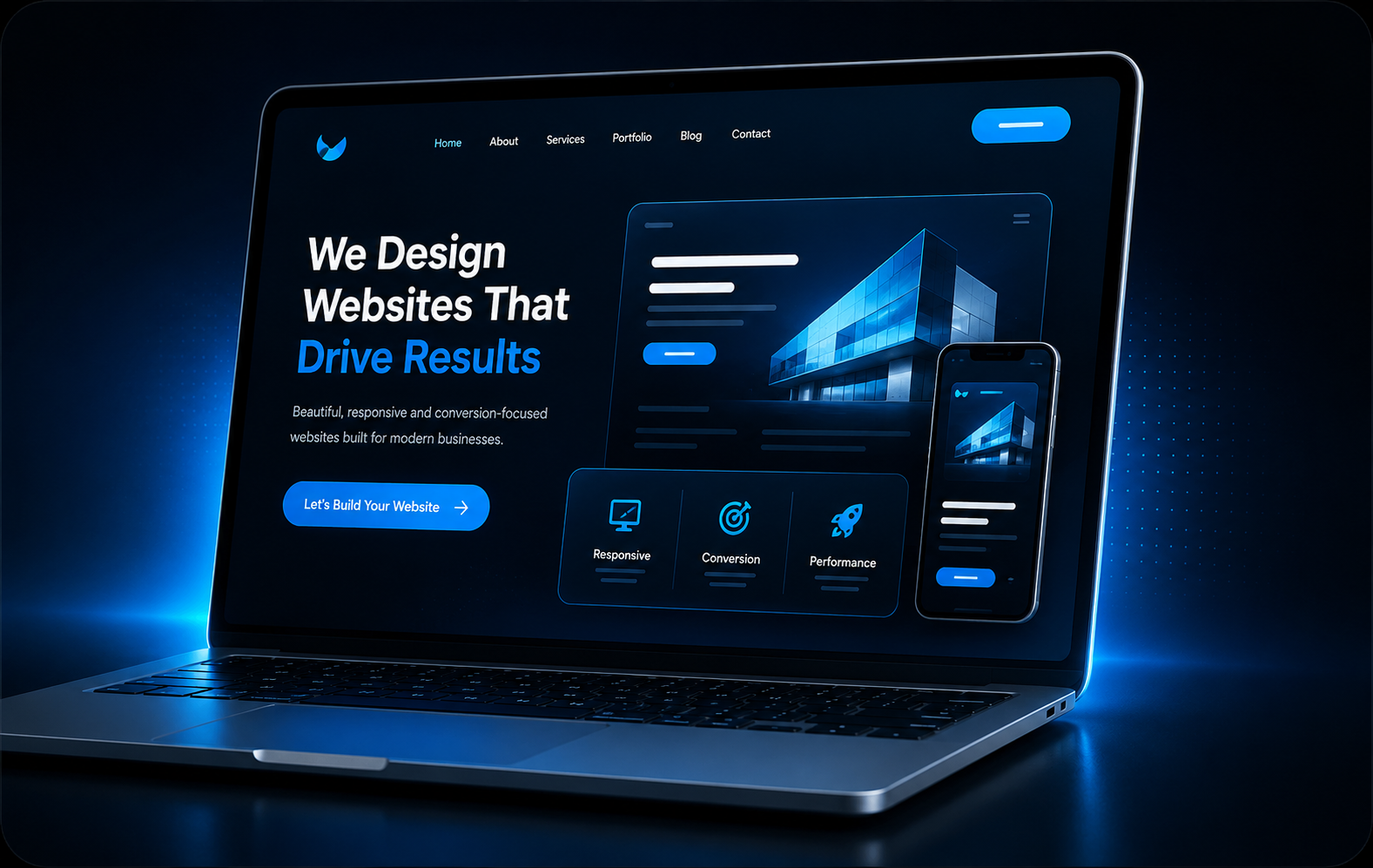
A website is often the first serious interaction a prospect has with a business. That means design is not simply about making a page attractive. Good website design helps a visitor understand what a company does, why it is credible and what they should do next.
Start with the visitor, not the decoration
Strong websites are organized around questions visitors are already asking. Who are you? What do you offer? Is this relevant to me? Can I trust you? How do I contact you? A clear information hierarchy answers those questions without forcing people to search through menus or dense paragraphs.
The first screen should communicate a specific value proposition, a supporting explanation and a visible action. A good call to action can be simple: request a consultation, call the business, start a project discussion or view relevant work.
Design for scanning
Most users scan before they read. Use short sections, meaningful headings, concise supporting copy, strong contrast and visual rhythm. Break complex services into understandable groups and place proof—such as client results, testimonials or project examples—near the claims they support.
Responsive design is part of conversion
A desktop layout squeezed onto a phone is not responsive design. Mobile users need readable type, comfortable tap targets, sensible spacing, fast-loading images and forms that fit the viewport. A responsive system should adapt the layout rather than simply shrink it.
Make the next step obvious
Every important page should have a purpose. Service pages can invite an enquiry, course pages can encourage an application and landing pages can focus on lead generation. Repeating a useful call to action at natural points helps visitors move forward without feeling pressured.
The best website design combines clarity, trust, performance and action. When those elements work together, design becomes a business tool rather than a visual layer added at the end.